Work / Splunk
Splunk Building a Design Org from Zero
When I joined Splunk as Head of Design, UX was unrecognized. No team, no process, no shared language with engineering or product. Three years later: 72 designers, a proprietary design system, a UX research practice, and a program management function.
Creating the Design Org
Splunk was a B2B data company with a consumer blind spot. I brought consumer-focused design expertise into a traditionally B2B-centric environment and that friction turned out to be useful. We stopped treating the businesses we served as monolithic entities and started treating them as collectives of individual users. We visited customers constantly. We listened. That shift made our software more intuitive, more engaging, and more human.
From there, we built the team from 11 designers to 72. That growth wasn’t about headcount. It was about capability: the skills and perspectives needed to actually understand and serve our users.
UX Maturity
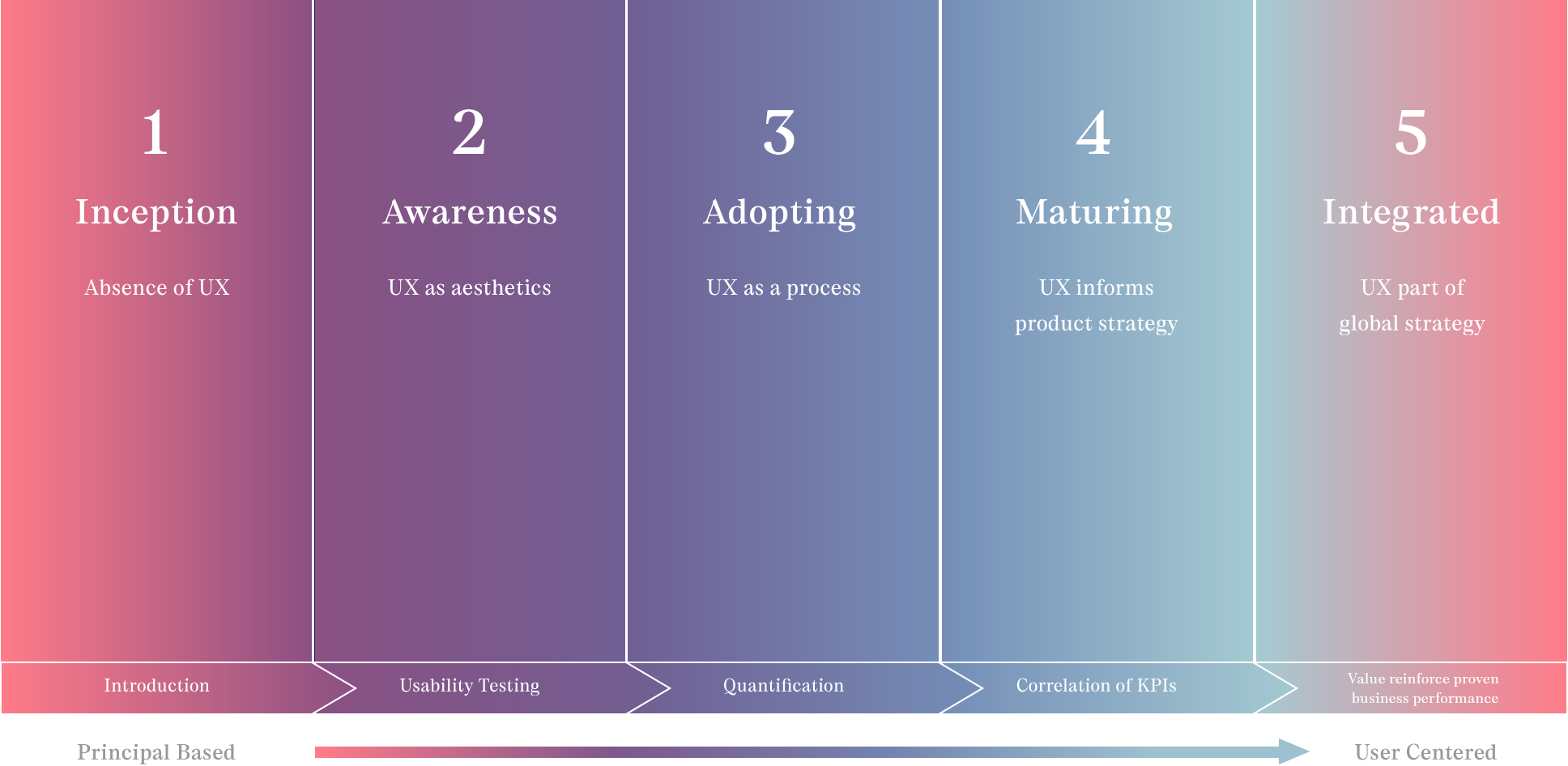
Before I could move Splunk forward, I needed to know where it stood. I ran a UX maturity audit assessing both the team’s and executives’ understanding of design within the organization. The answer: early awareness stage. No formal process, no dedicated team, but growing recognition that something was missing.
- 1.Inception — UX is unrecognized. No user-centered approach exists.
- 2.Awareness — Value of UX begins to register — but no formal process or team yet.
- 3.Adopting — Ad-hoc UX practices begin on specific projects. Wheels are in motion.
- 4.Maturing — Dedicated team, formalized methodology, widening recognition across the org.
- 5.Integrated — UX embedded in strategy. Practiced on most projects. Part of the executive conversation.
Splunk was at 2. The chart gave us a shared language and a clear trajectory. That alone changed the conversation with executives.
UX Research Team
Most companies treat research as a project-level input something you commission before a big release. We built something different: a UX Research team fully embedded in product development from concept through launch.
The team combined qualitative and quantitative researchers present at every stage. We introduced “Rapid Research”: assumptions tested and results delivered within three days. Fast enough to actually inform decisions, not just document them after the fact.
The impact went beyond design. Research insights shaped feature prioritization, product strategy, and marketing. User needs stopped being a UX concern and became an org-wide reference point.
Design Program Management
One of the persistent problems in design organizations is the gap between designers, engineers, and product managers. They speak different languages, operate on different timelines, and optimize for different things. I built a dedicated UX Program Management function to close that gap permanently.
UX Program Managers became the nexus of every project facilitating the exchange of ideas, aligning goals, managing timelines, and shepherding work from inception to completion. Their core job was translation: design intent into technical requirements, technical constraints into design parameters, user needs into language the whole team could act on.
Many of the engineers and PMs we worked with had never collaborated directly with designers before. The Program Management team made that transition possible.
Prisma Data Visualization System
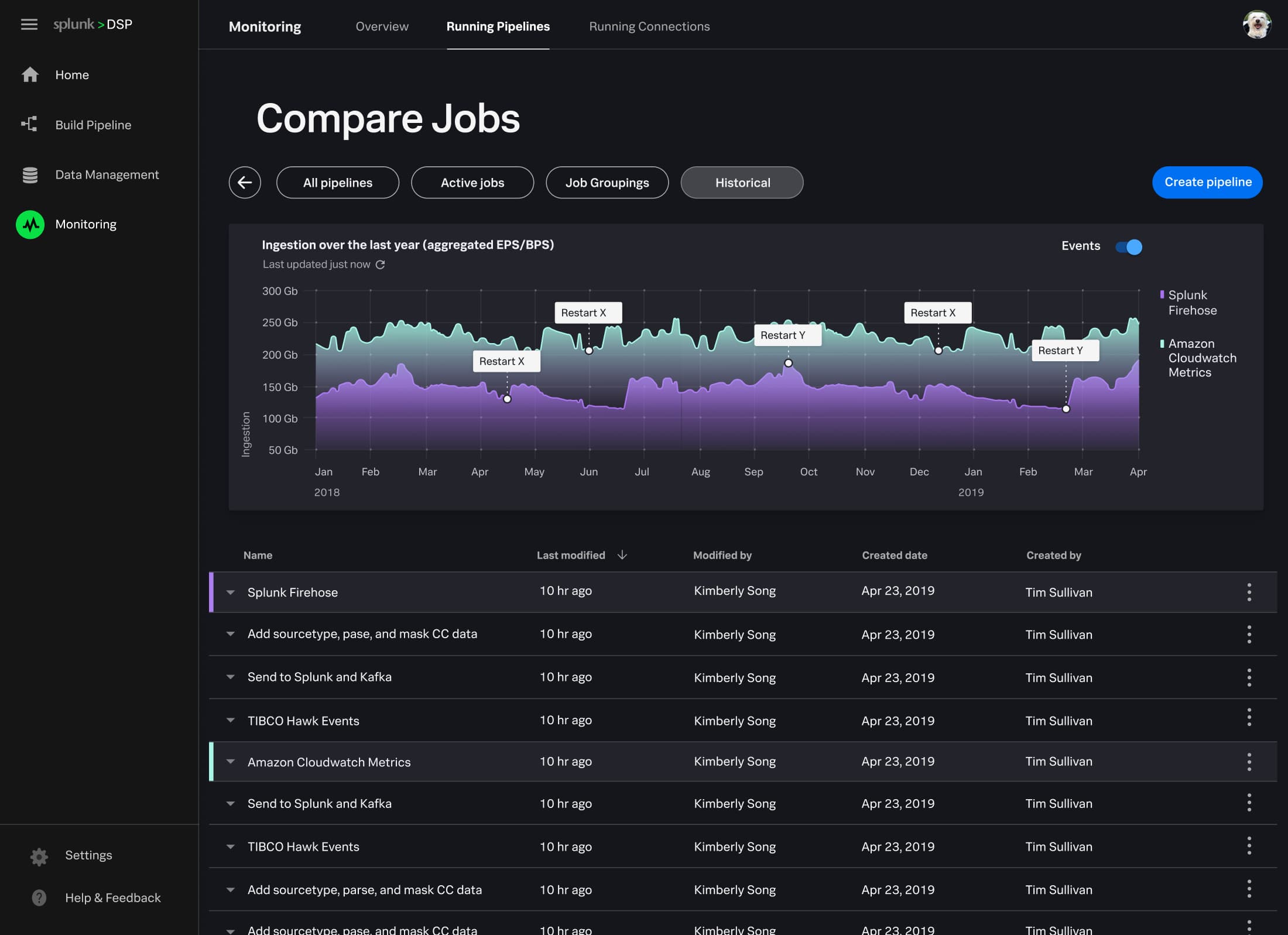
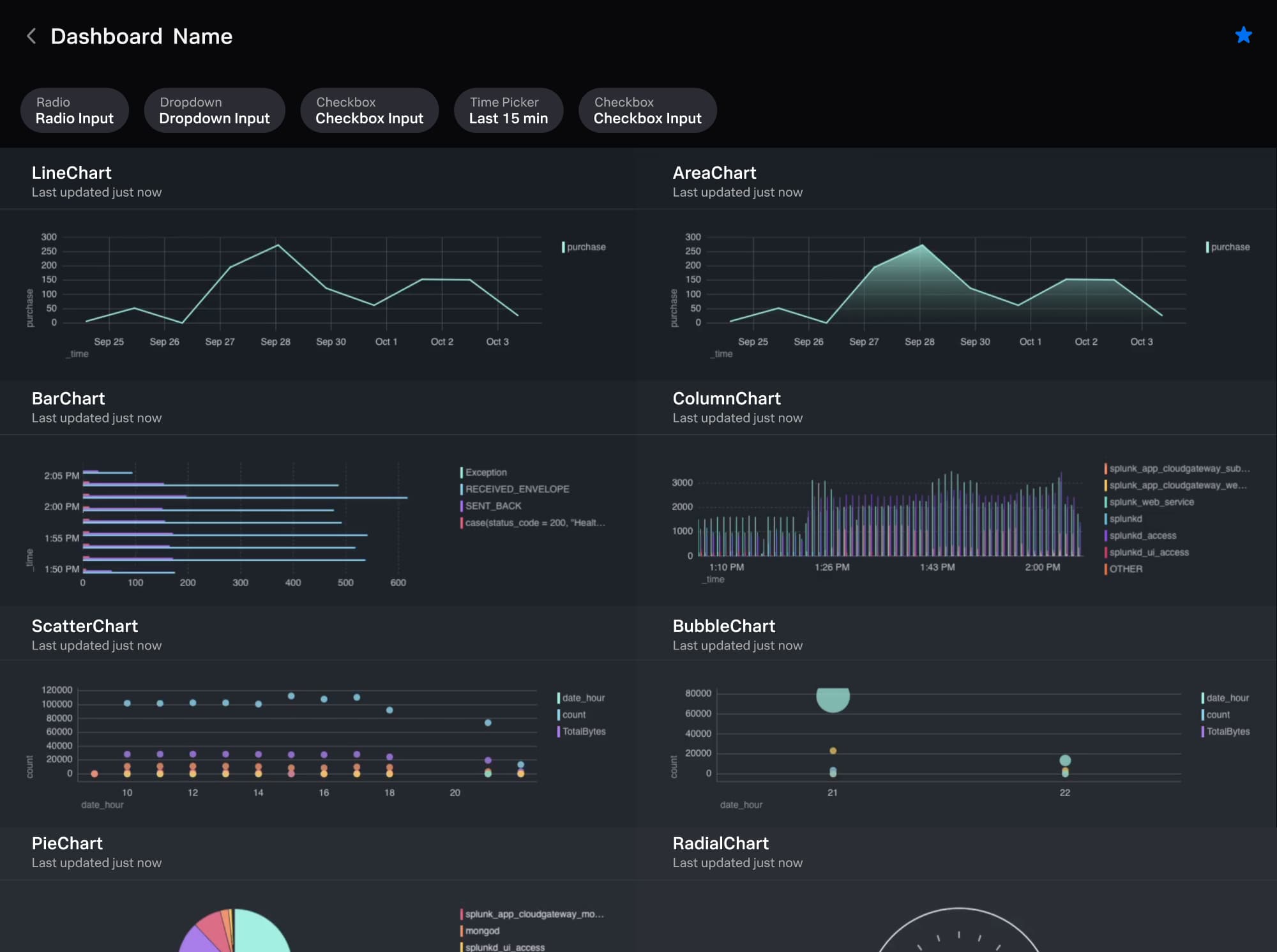
Data visualization is at the core of what Splunk does. The existing approach off-the-shelf solutions like Highcharts wasn’t keeping pace. Datadog was already building highly interactive, polished dashboards. A bespoke solution wasn’t just desirable. It was a competitive necessity.
We built Prisma. The process started with a full audit of existing visualization capabilities and deep user research into how Splunk users actually worked with data. From there, we collaborated closely with engineering to define the interactive layer: drill-down, filtering, adjustable views, intuitive interpretation of complex data sets.
Prisma became the cornerstone of Splunk’s dashboard capabilities and a genuine competitive differentiator.
Democratic Design Process
Retention was high at Splunk. I think that’s directly tied to how we made decisions.
I ran a democratic design process not consensus-driven, but genuinely inclusive. Every designer’s perspective had weight. When I pushed a direction, I showed my reasoning not just my decision. I presented proposed solutions, explained the rationale, and invited real critique. That created commitment, not compliance.
In critical situations I facilitated rather than decided guided the team through the process while ensuring every voice was heard. The result was work built on deliberation and conviction, not just whoever spoke loudest.
Getting Design a Seat at the Table
When I arrived, design was a service function. Requests came in, deliverables went out. No upstream involvement, no role in product strategy, no presence in executive reviews. Changing that wasn’t about asserting authority it was about demonstrating relevance.
I made two moves early. First, I started showing up to product planning with evidence user research findings, competitor teardowns, usability data not just design proposals. Second, I pushed for design reviews at the exec level to happen before engineering commits, not after. Both required building relationships before asking for process changes.
Over 18 months, design moved from output function to strategic input. We had a seat in product roadmap discussions, a voice in go-to-market decisions, and an executive sponsor who understood what design maturity actually meant. That shift changed everything downstream.
Hiring & the Bar
Growing from 11 to 72 meant making around 60 hiring decisions. Each one either raised the bar or lowered it. I was deliberate about that.
We hired for range, not just craft. The team needed people who could work in ambiguity, communicate with engineers, present to executives, and still care about the pixel. Consumer designers who could learn enterprise. Researchers who could run a study in three days. Program managers who spoke both design and eng.
I also built out the career framework from scratch leveling criteria, promotion process, performance calibration. Without that structure, growth becomes arbitrary and retention suffers. Designers need to know what good looks like at their level and what the path forward is. That clarity is a retention tool as much as anything else.
Outcome
In three years, Splunk went from a design org that didn’t exist to one with 72 people, a proprietary design system, an embedded research function, and a program management practice. UX maturity moved from early awareness to integrated.
The products became measurably easier to use. Customer feedback improved. Sales engineering workflows where our users actually lived got faster. The competitive gap with Datadog on visualization closed.
In 2023, Cisco acquired Splunk for $28 billion. That number belongs to a lot of people. But design was part of the story not a footnote.